



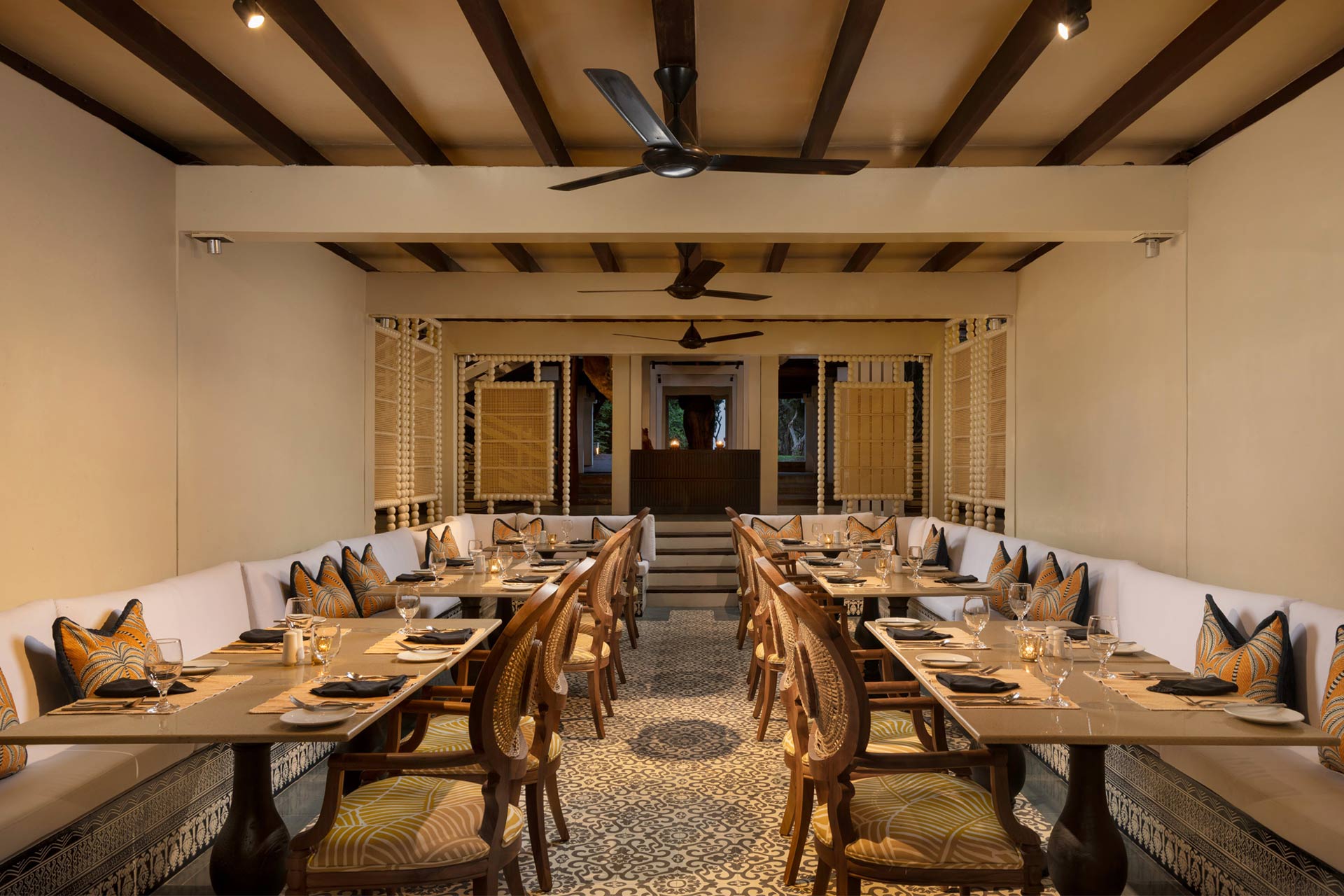
 The second step of the renovation of Uga Jungle Beach, which includes the 49 bedrooms and restaurant, has been unveiled by the Sri Lankan resort group Uga Resorts. The final enhancements, which include the beach club, swimming area, and spa, are scheduled to be finished in March 2026. The 49 wide cabins have a beautifully eclectic atmosphere thanks to their harmonious interior design. The exotic setting is complemented by clean lines, spacious proportions, and modern amenities, and intricate botanical prints adorn the walls and fern- and native flora-filled ferns reflect the location’s wild beauty. Each room is anchored by luxurious queen-sized beds, which are highlighted by vibrant headboards and jewel-toned cushions in keeping with Sri Lanka’s rich artistic history. The 75-cover restaurant, which has just been renovated, engages in a quiet conversation with its surroundings, letting go of the scenery and standing in for it. Through roofing panels, light travels through the roof, shifting as the sun moves through the deck’s arc, revealing the older tree that has grown through the deck itself. The gardens beyond the open top are echoed by a constrained, natural color that includes white-washed beams, black wooden wood, sharp linens, and olive-and-cream textiles. Cane dining chairs and other textured items add to a tropical sense that feels true and rooted in natural materials. The space, which is defined by its openness, completely breaks the distinction between inside and outside, opening to a manicured lawn, wilder southern scrub, and remote glimpses of the beach and ocean. Yasmine Svensson, Uga’s interior designer, says,” We wanted to honor Uga Jungle Beach’s exotic coastal figure while providing contemporary clarity. The palette “draws from the landscape,” with floral prints on the walls, floral fern prints on the walls, and healthy textures grounded in clean, white architecture. Every room celebrates the strain between subtropical wildness and sophisticated simplicity, from the cabins to the cafe. The intention was to produce interiors that “live with the environment” rather than against it, creating a beautifully eclectic atmosphere.